
Embracing the Scale: My Journey with 2mm Ancient Miniatures
Several years back, I ventured into the world of 2mm miniatures, finding them to be an affordable, convenient, and versatile alternative to the traditional 6mm and 15mm scales. This exploration led me to create universal 2mm Napoleonic Austrian and French armies on expansive 60x40mm bases.
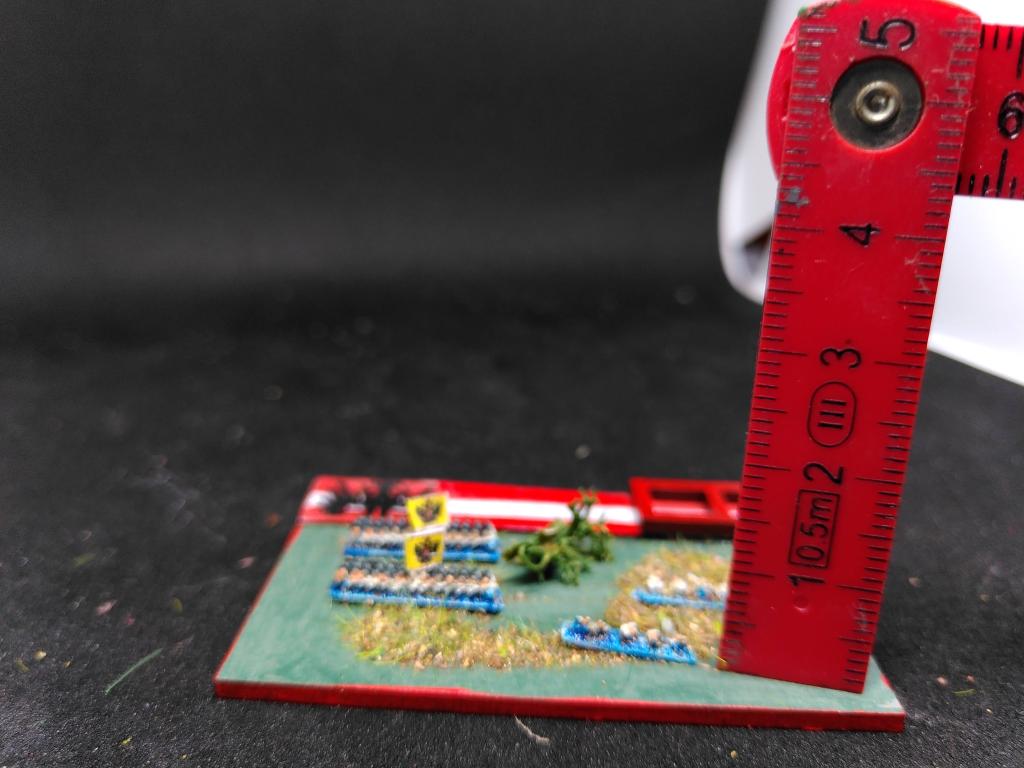
These miniatures serve as a perfect complement to my 1812-15 era-specific 6mm units, offering broad utility for conflicts spanning 1792 to 1812.
Expanding the 2mm Collection: Roman Legions and Ancient Warriors
This year, I completed a substantial 15mm Early Imperial Roman army, along with their barbarian adversaries, marking a significant milestone in my collection.

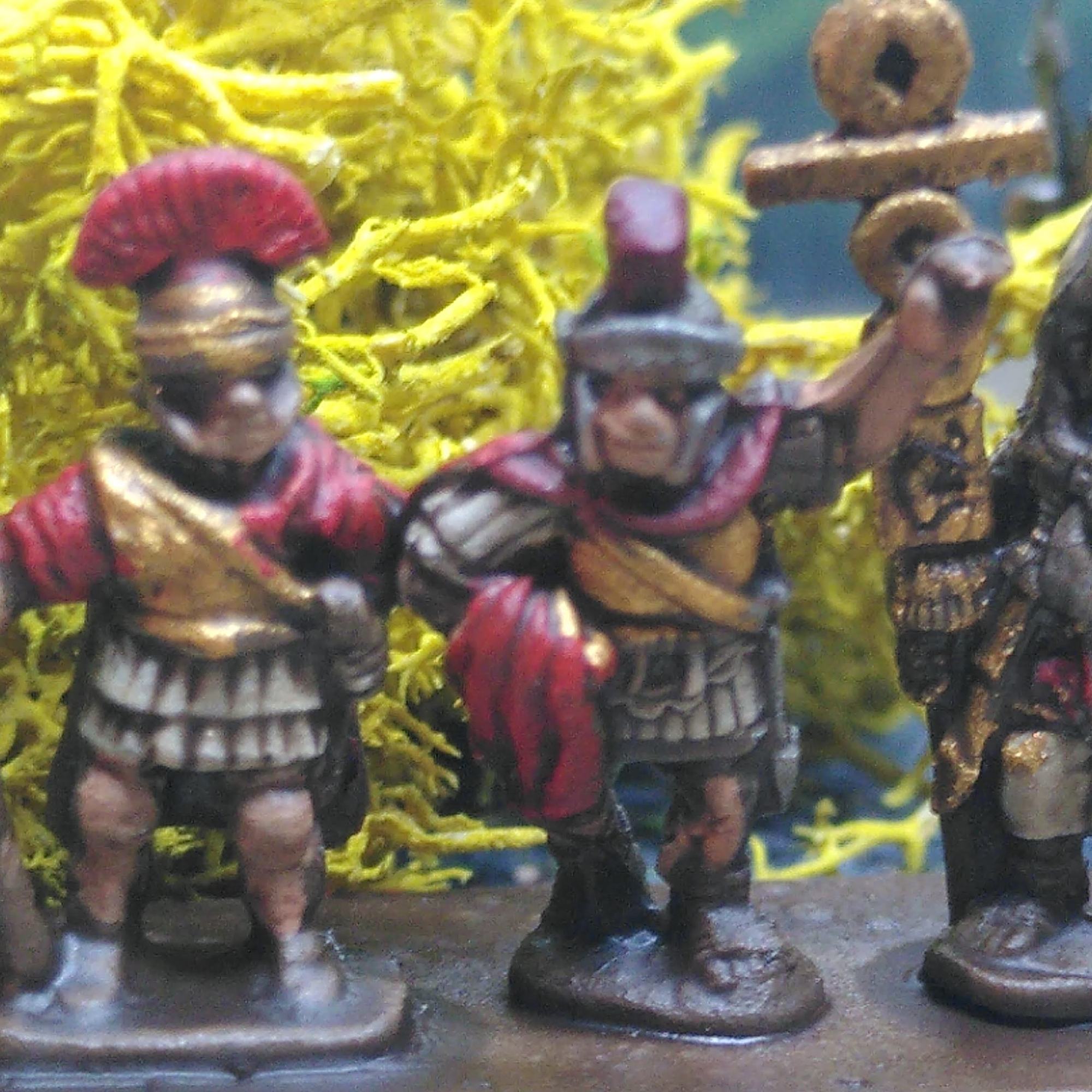
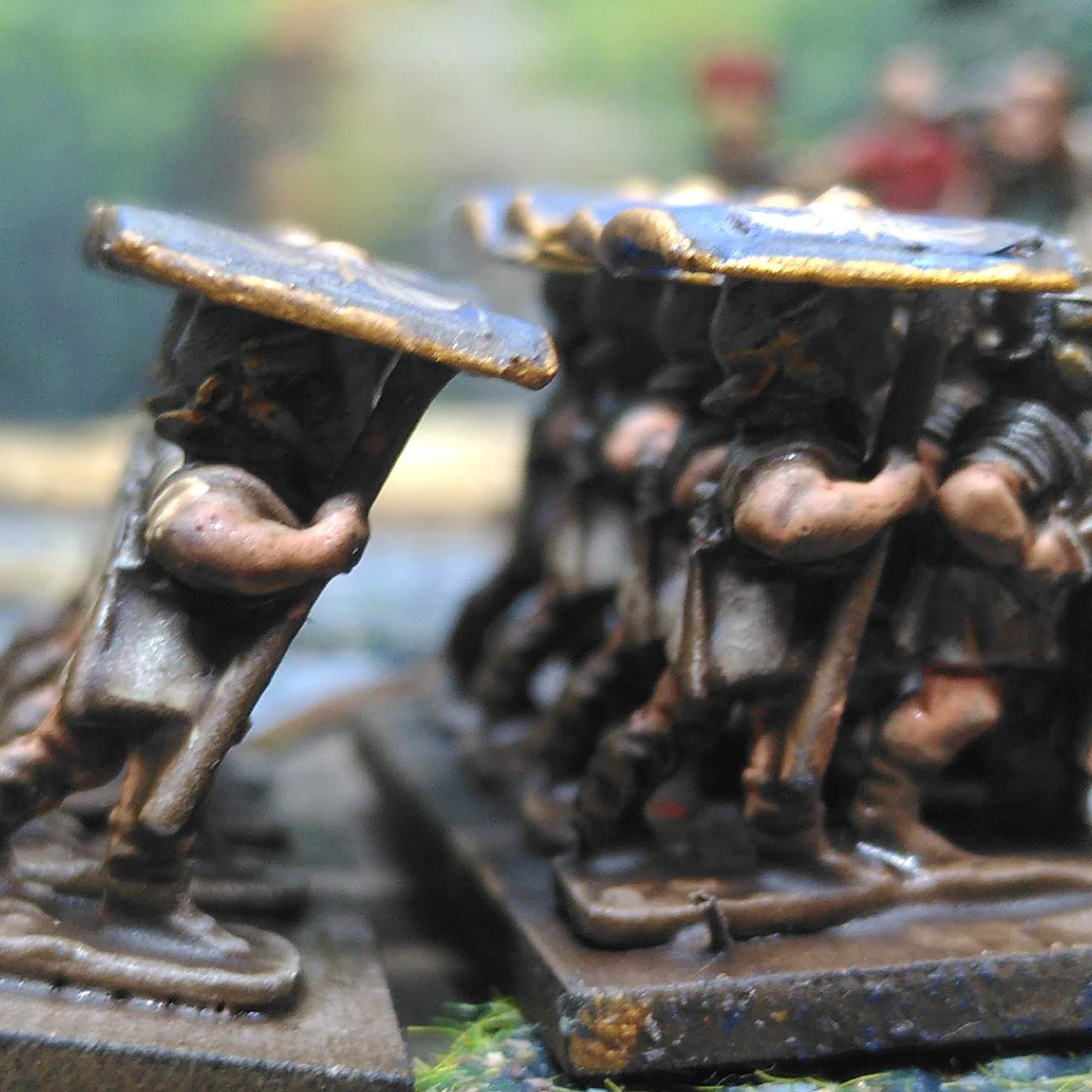
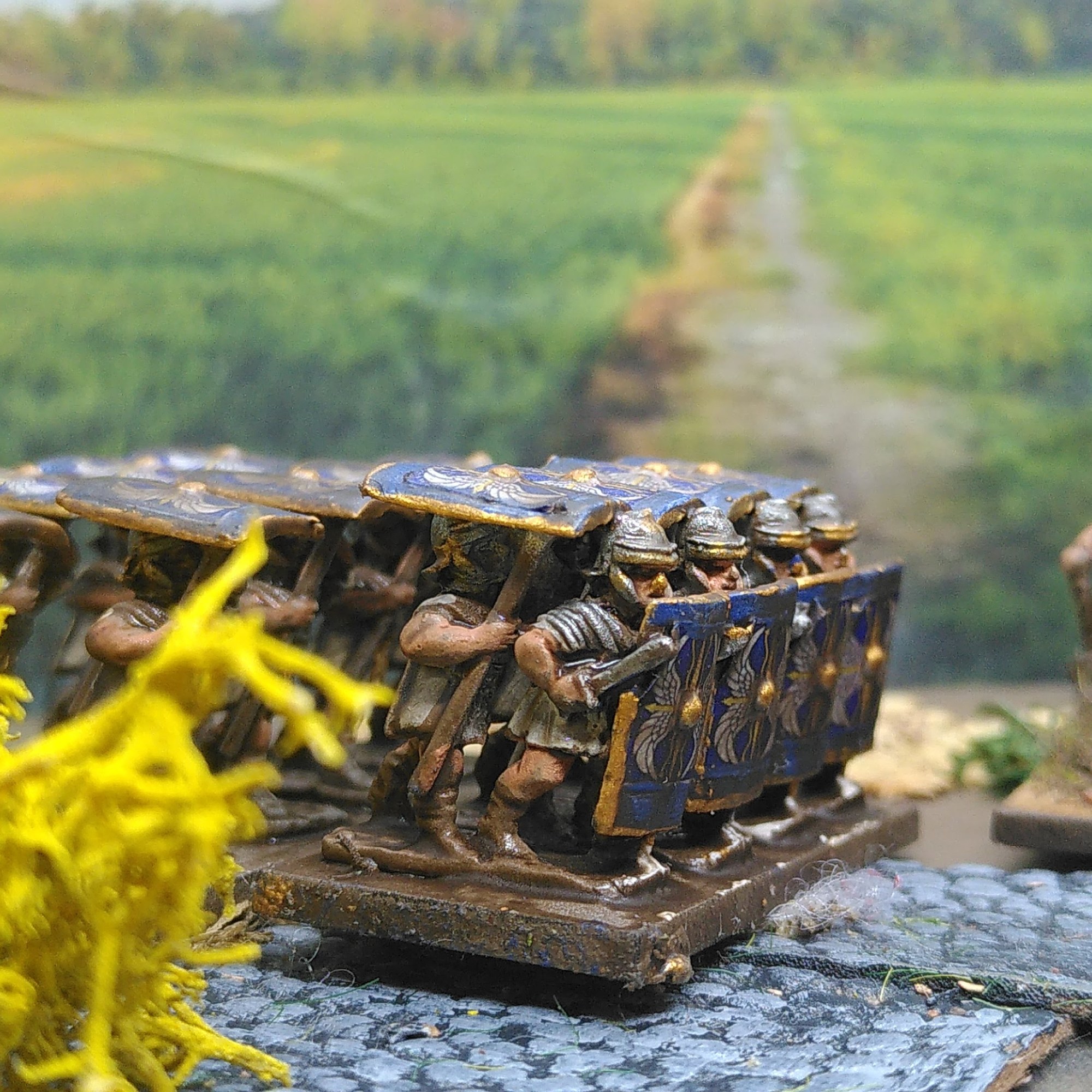
This 15mm project was my deep dive into the Early Imperial Roman period, a mainstay of my Ancient era miniatures. Other 15mm side projects suddenly seemed irrelevant to me. Why another 15mm big army? Because it’s such a joy to paint? It is. But I want to play more, and paint less.
Transitioning to Generic Ancient Armies
So, after parting with my compact 15-base 15mm Alexandrian DBA armies, selling them to an enthusiast friend, I opted to reinvest in generic 2mm Ancient armies. This strategic move was to facilitate the representation of large Greek, Macedonian, Persian, and various other Ancient armies. I bought Irregular 2mm, as before.
Unpacking the 4 Army Packs
Macedonian Pack Contents:
- 24 square pike blocks
- 4 ‘quarter sized’ pike blocks
- 12 strips light infantry (6 ‘figures’ per strip)
- 12 strips medium infantry, (more densely packed figures)
- 8 strips light/medium cavalry (5 ‘riders’ per strip)
- 8 strips heavy cavalry (6 per strip)
- 4 elephants
Persian Pack Contents:
- 12 strips light infantry (6 ‘figures’ per strip)
- 8 strips medium infantry, (more densely packed figures)
- 61 rectangular infantry blocks ‘heavy infantry/phalanx’
- 12 strips light/medium cavalry (5 ‘riders’ per strip)
- 18 strips heavy cavalry (6 per strip)
- 4 chariots
I merged a mixed Macedonian/Persian set into an efficient basing system, resulting in a formidable array of bases and commanders.
- 16 pike bases (3 units per base)
- 29 skirmish bases (3 units per base, mixed light and medium infantry
- 20 heavy infantry bases (6 units per base, rectangular ‘heavy infantry’ blocks)
- 20 ‘light cavalry’ (2 units per base)
- 21 ‘heavy cavalry’ (3 units per base)
- 4 chariot bases
- 4 elephant bases
- 2 commanders in chief and 6 subcommanders
114 bases, plus commanders! For 13,75 per pack = 53 pound in total. Just a fraction of a Warlord Epic Hail Caesar! box with smaller armies.
I include a full list here with a detailed description of each 2mm Irregular unit as PDF, from Tony Hughes/ Tiny Tin’s Troops published in 2005. Irregular has updated the scenery range since then.
The Art of Basing 2mm Ancients
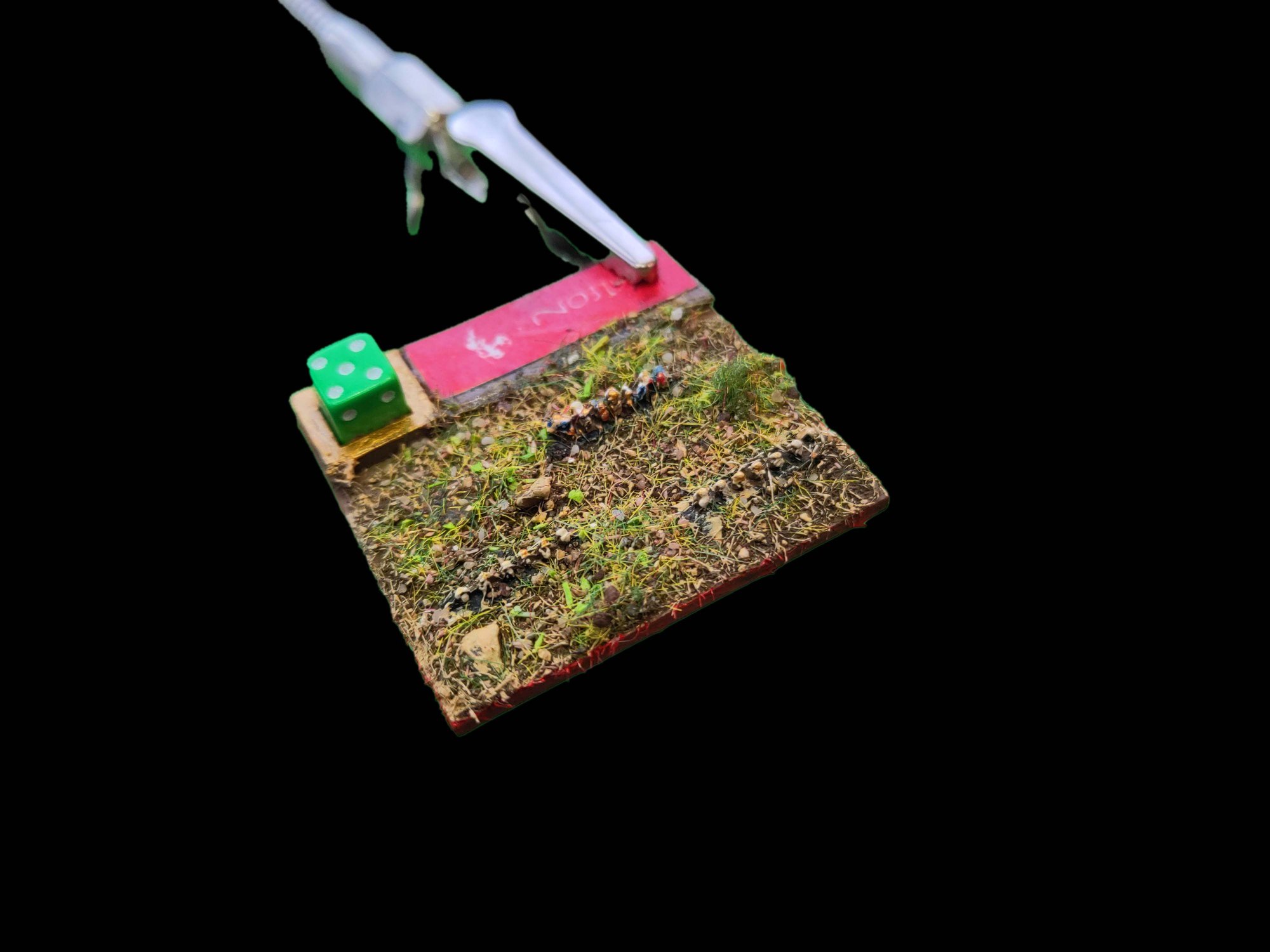
A 2mm-base is for me a chess piece, a three dimensional card. See below.
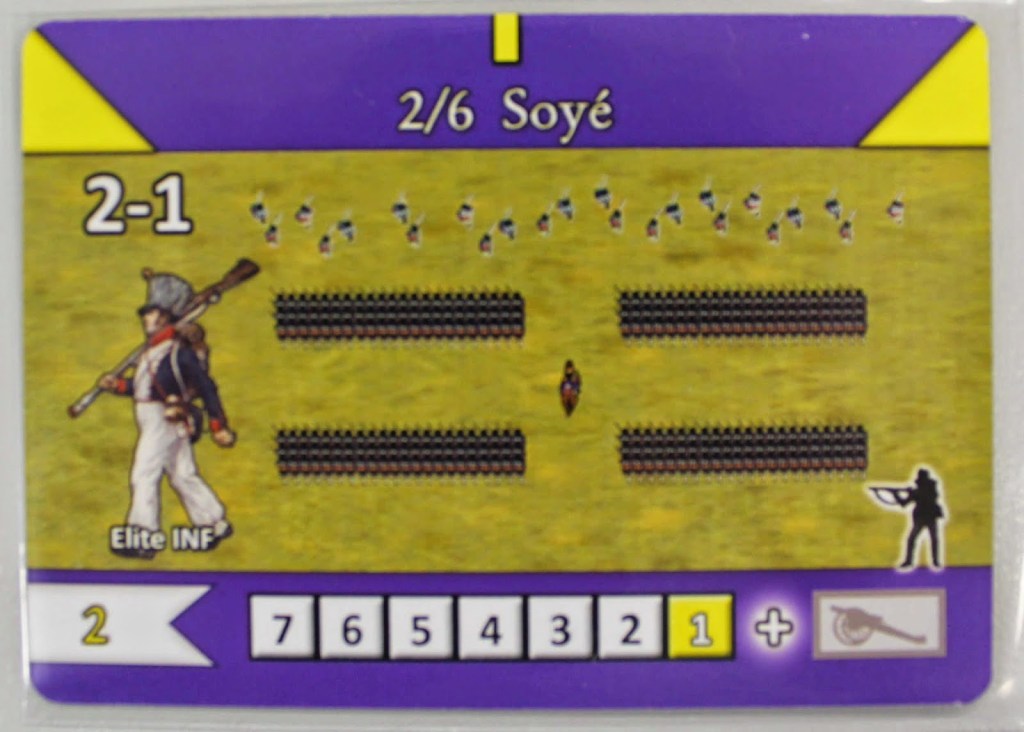

I’m a proponent of ‘bigbasing’; my 2mm Napoleonic infantry blocks, that represent batallions, are elegantly positioned on 60mm by 40mm bases, ideal for Blücher gameplay. However, for Ancient eras, the standard 40mm base size, as advised by popular wargaming blogs and rulesets, proved more suitable. This size facilitates easy identification and alignment with various gaming systems like DBx, AdlG and M&G. Infantry 40x40mm, cavalry 40x30mm. Magnetic strip, dice cell and label.

Innovative Labeling Techniques For Ancients
I split the bases in two equal armies, red and white. In a creative twist, I turned to Greek mythology, crafting labels from A to Z (Ares, Brixos, Chronos… Zeus) using a Greek-styled Marathon font. This system allows for flexible unit organization, complemented by color-coded and symbolic labels. Helmets and warriors are part of the font set. Symbols improve identification.
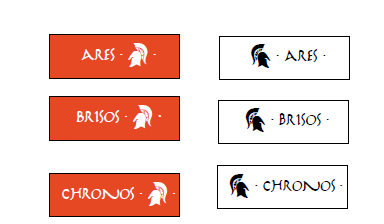
I now have the flexibility to intersperse red and white units in any army configuration that suits my needs, adding an extra layer of customization with colored metal markers on the magnetic strips. Additionally, I can use various colored dice in the dice cells for enhanced distinction. This setup is generic, universal, and perfectly tailored to my preferences.
Painting and Detailing
My painting approach for these miniatures follows a methodical process:
- Preparing the base with dice cells and magnetic strips.
- Adding flock and miniature units.
- Priming, contrast painting, and dry brushing for depth and texture.
- Random colour dots to give the impression of helmets, shields, tunics and skin.
- Finishing touches include detailing and label application.
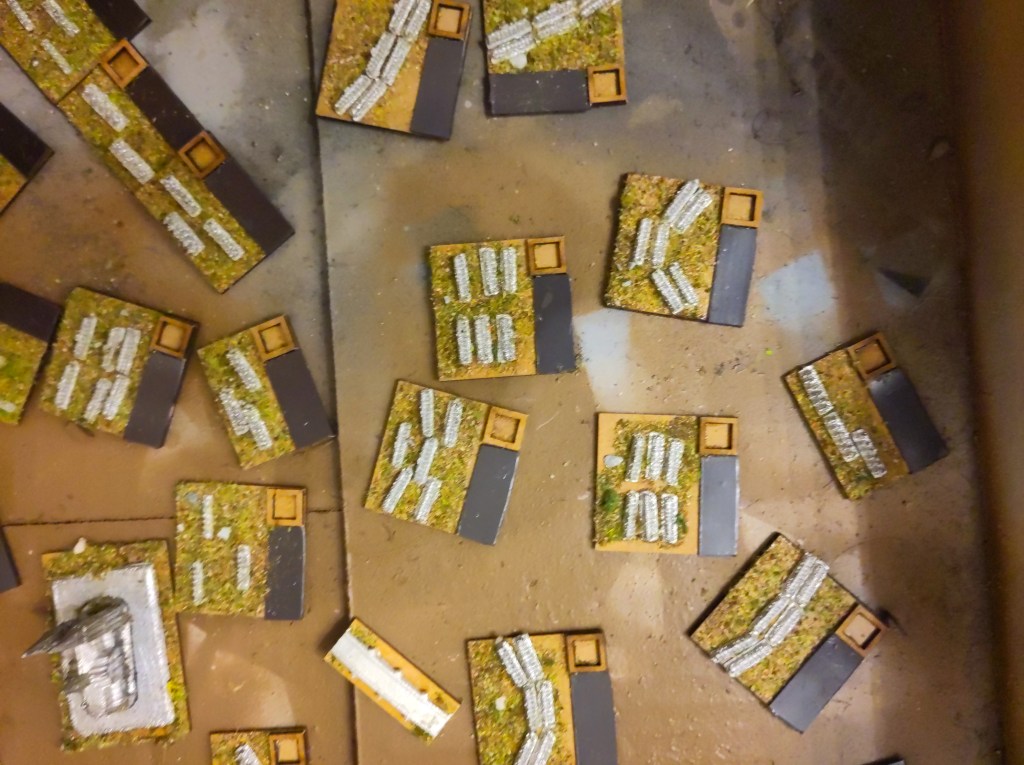
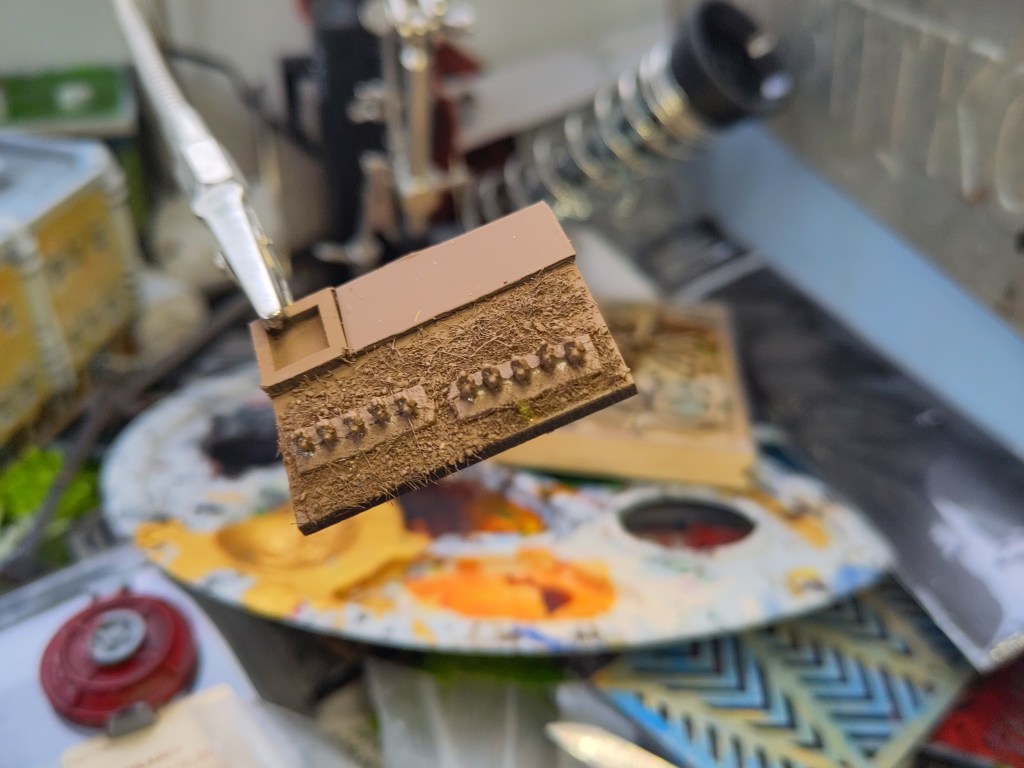
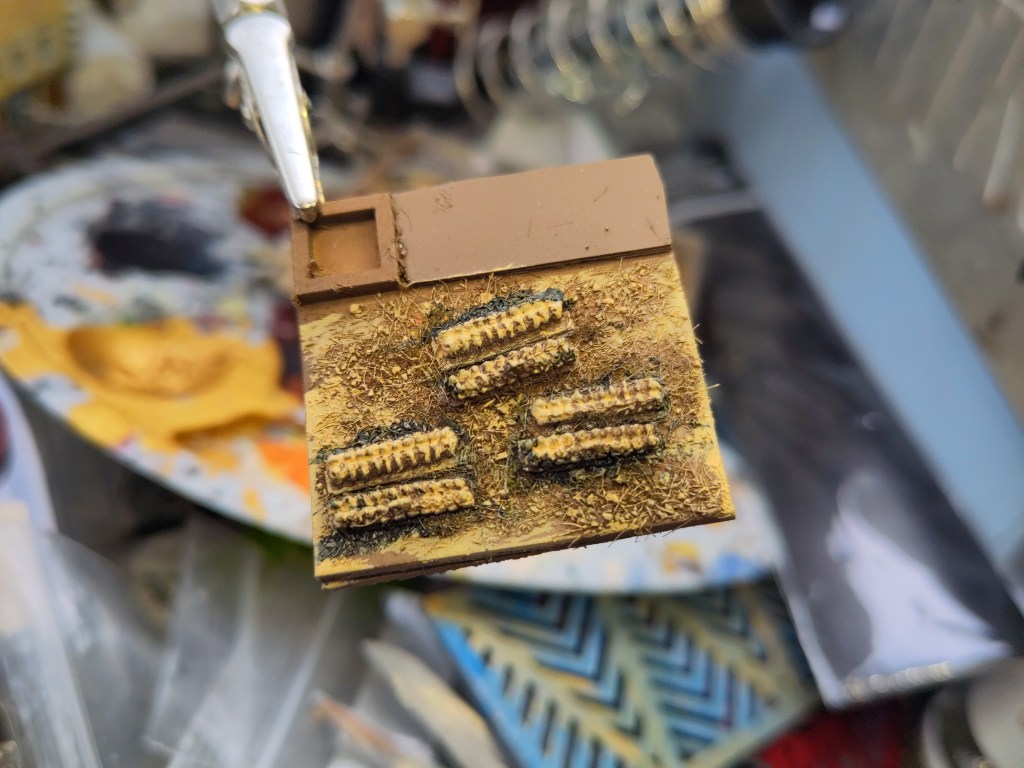
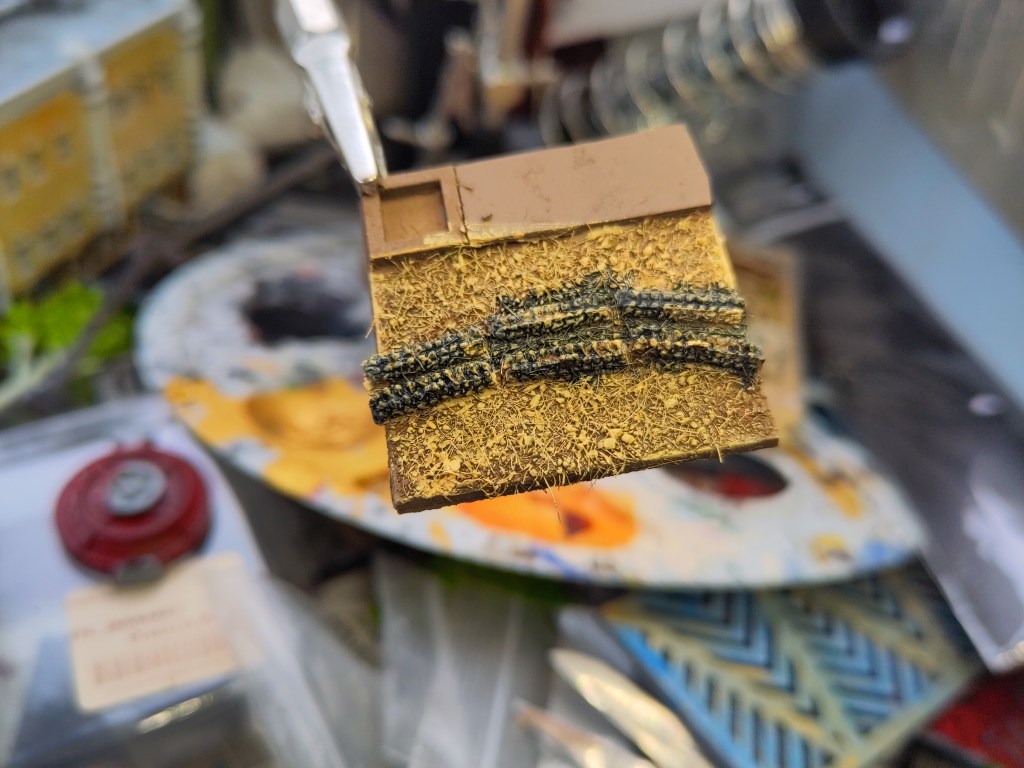
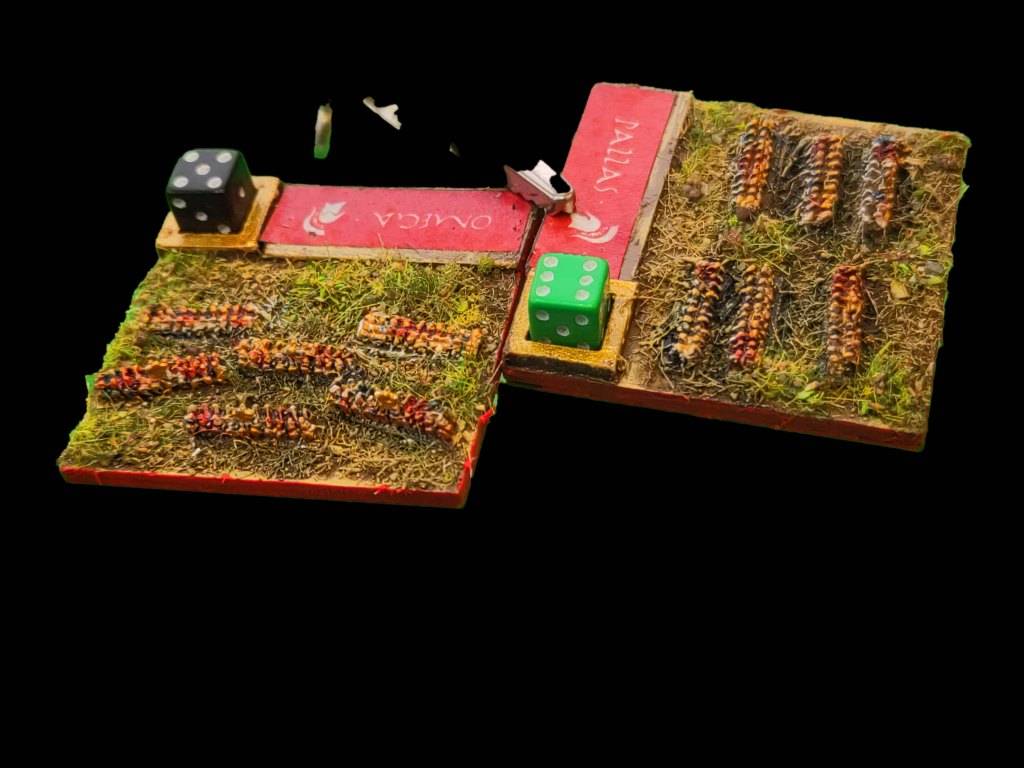
For more insights and visual guides, refer to my detailed tutorial and the other by expert Donnis Lopatka.
Configuring Units per Base
In pursuit of depicting dense, vibrant armies, I experimented with various configurations, ultimately choosing a balance that best represented the massed formations of the era, looked good, and was also economical. Six pike blocks on a base is beautiful, see below…
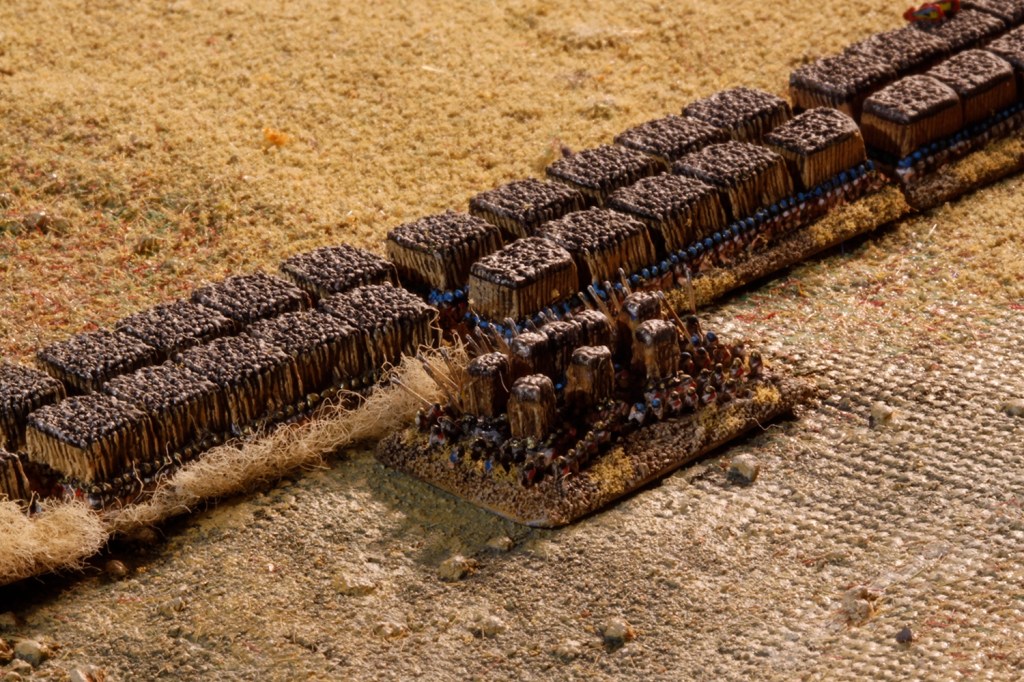
… but with just three on a base I double my bases.
The pikes (3 blocks per base)
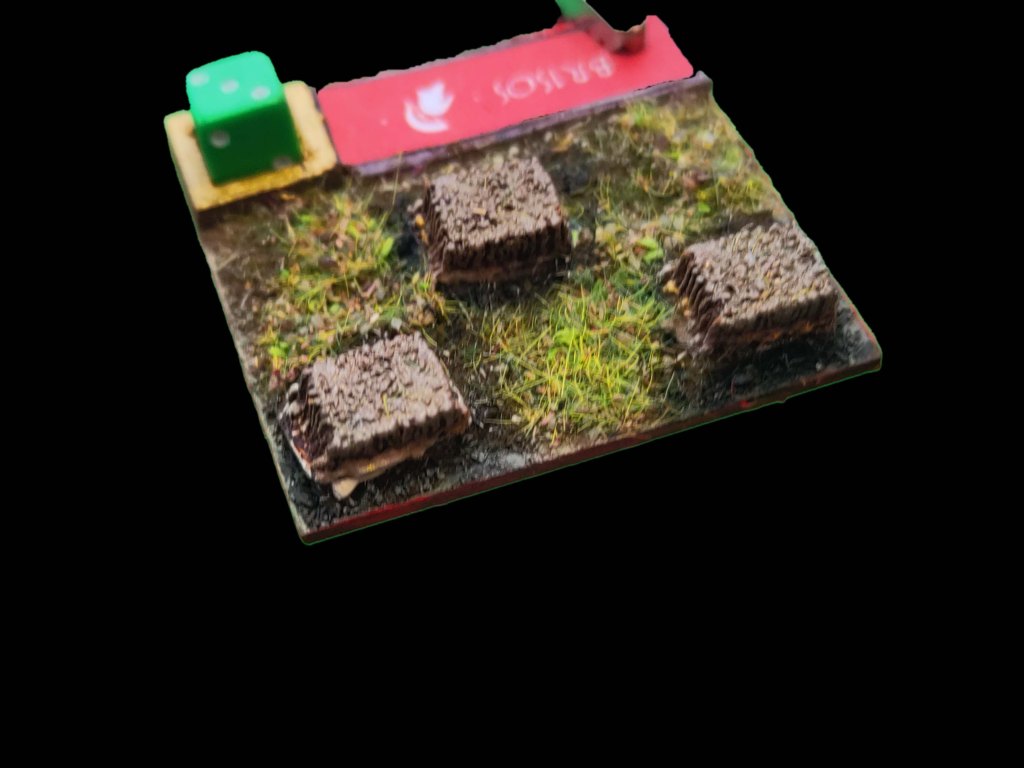
The heavy infantry (6 blocks per base)
The skirmishers (3 blocks per base)

The heavy cavalry (3 strips on a 40×30 base)
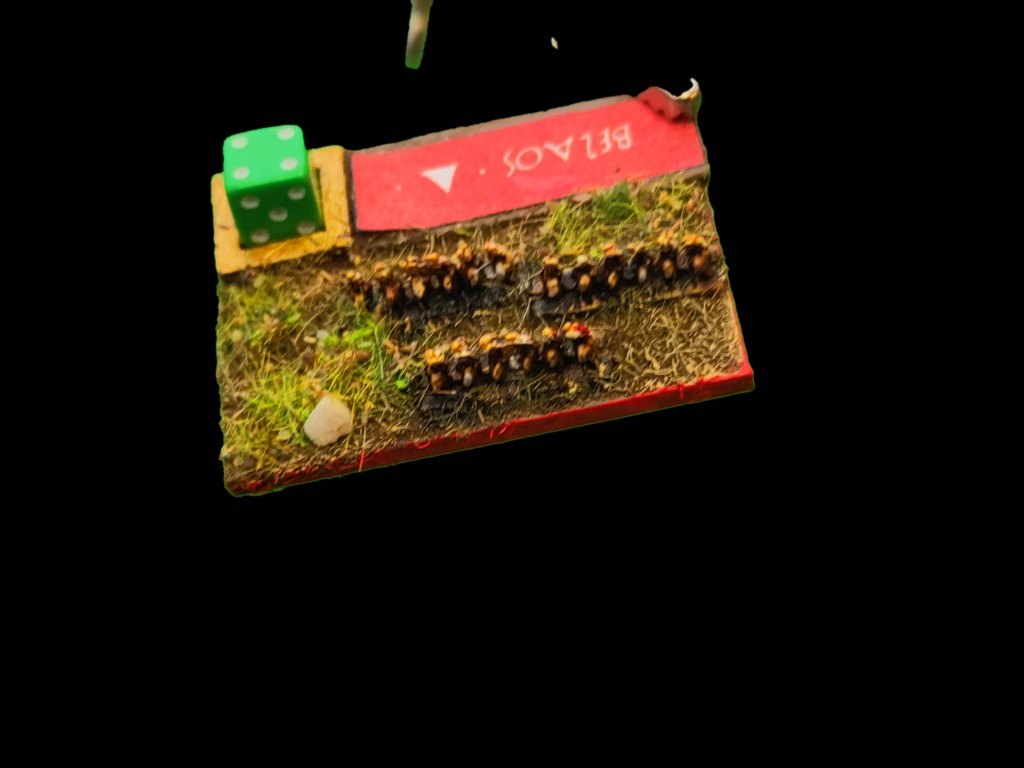
The light cavalry (2 strips on a 30x40mm base)
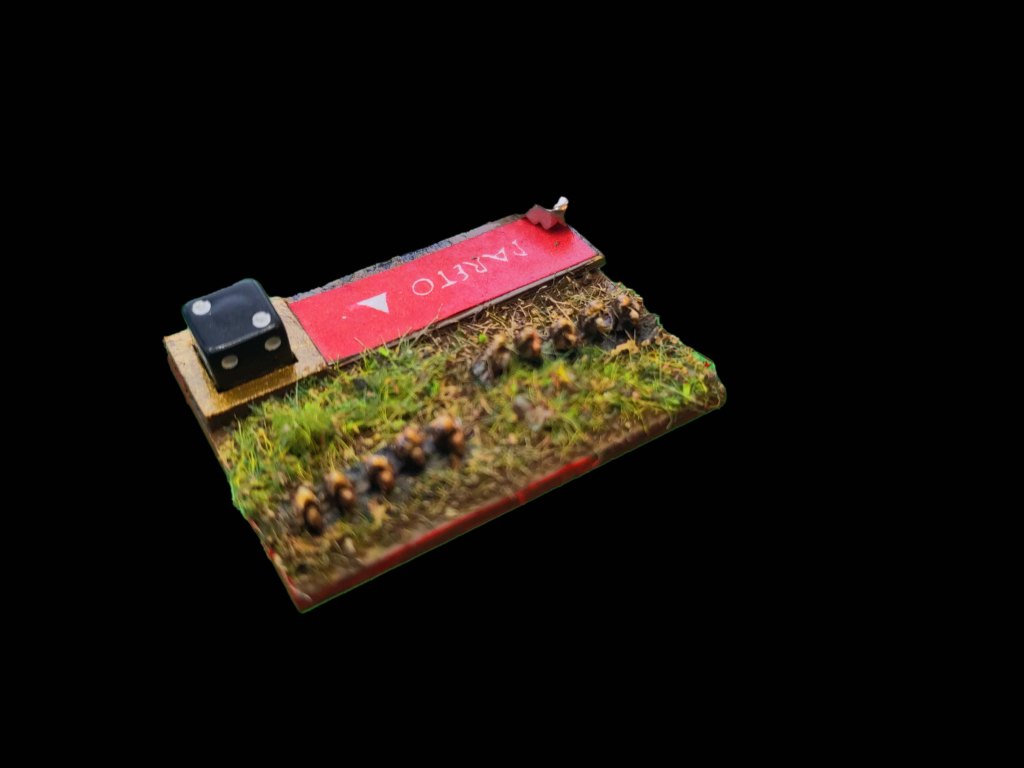
Chariots (2 per base)
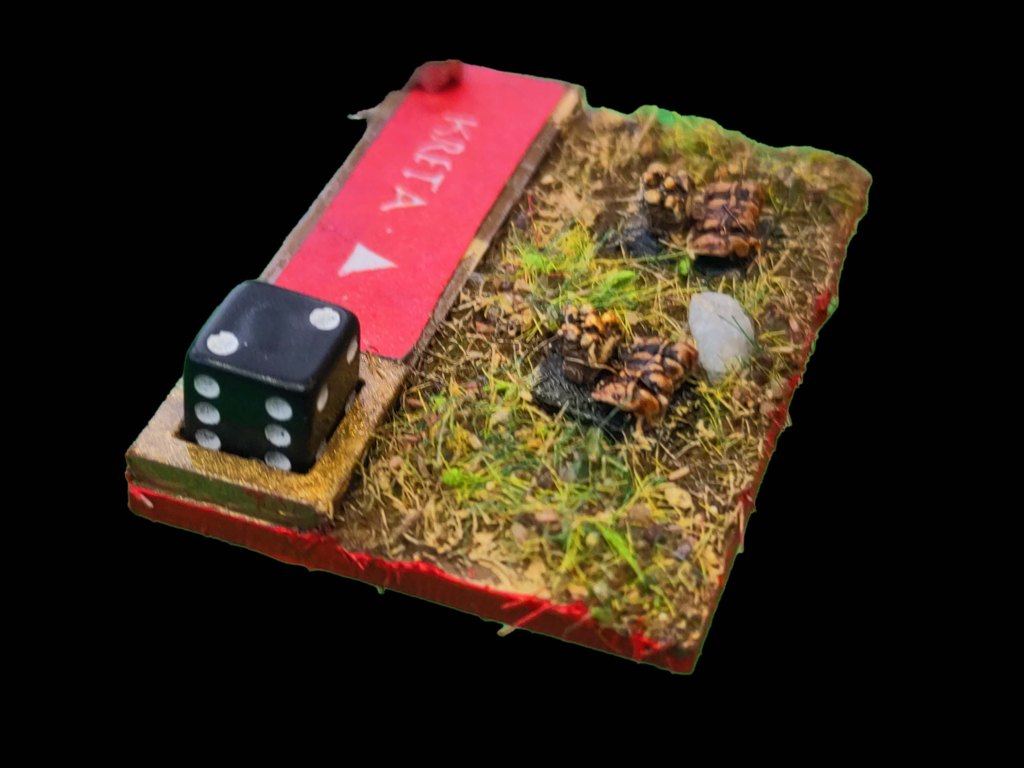
Elephants (2 per base)
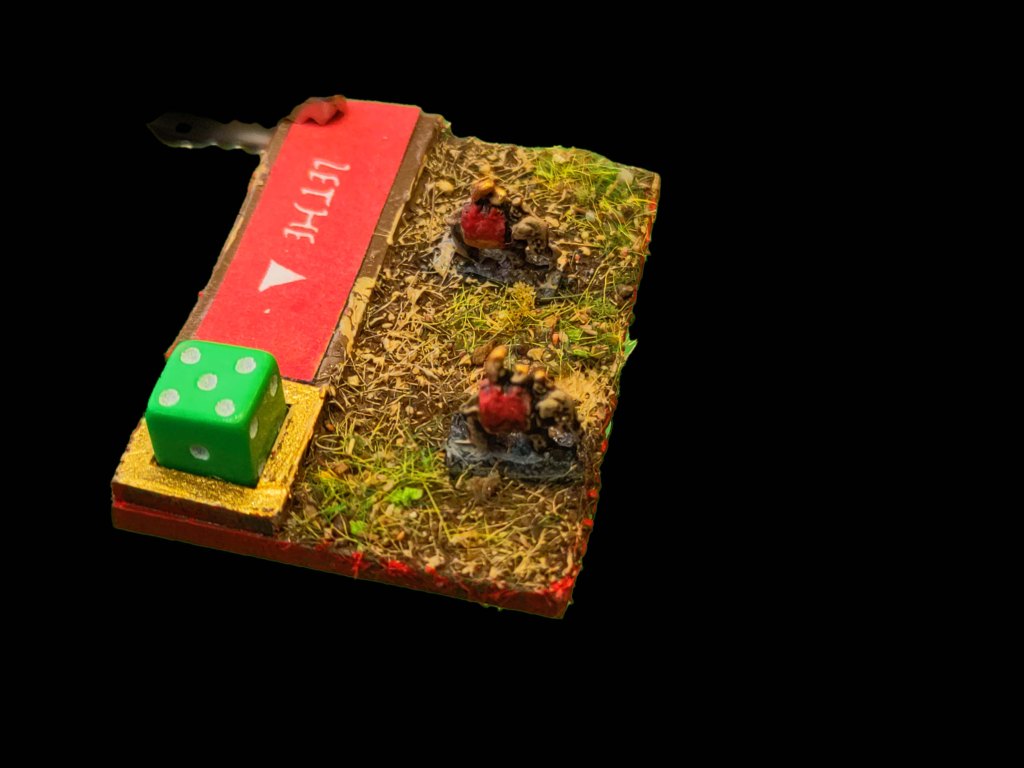
Generals (round bases)
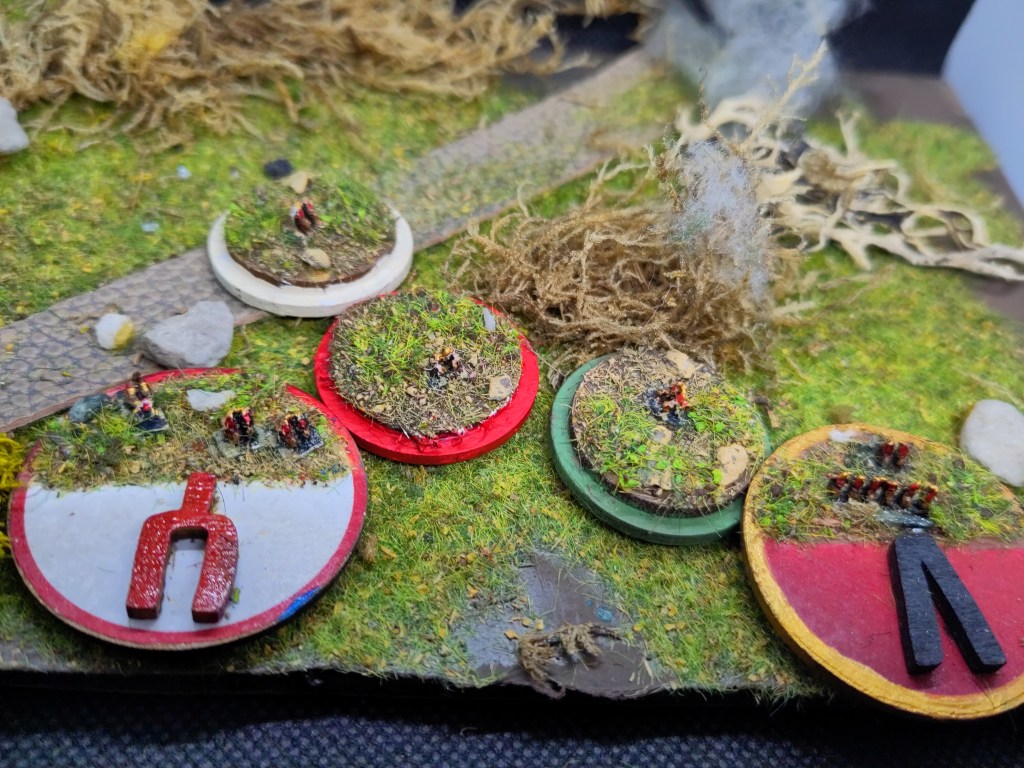
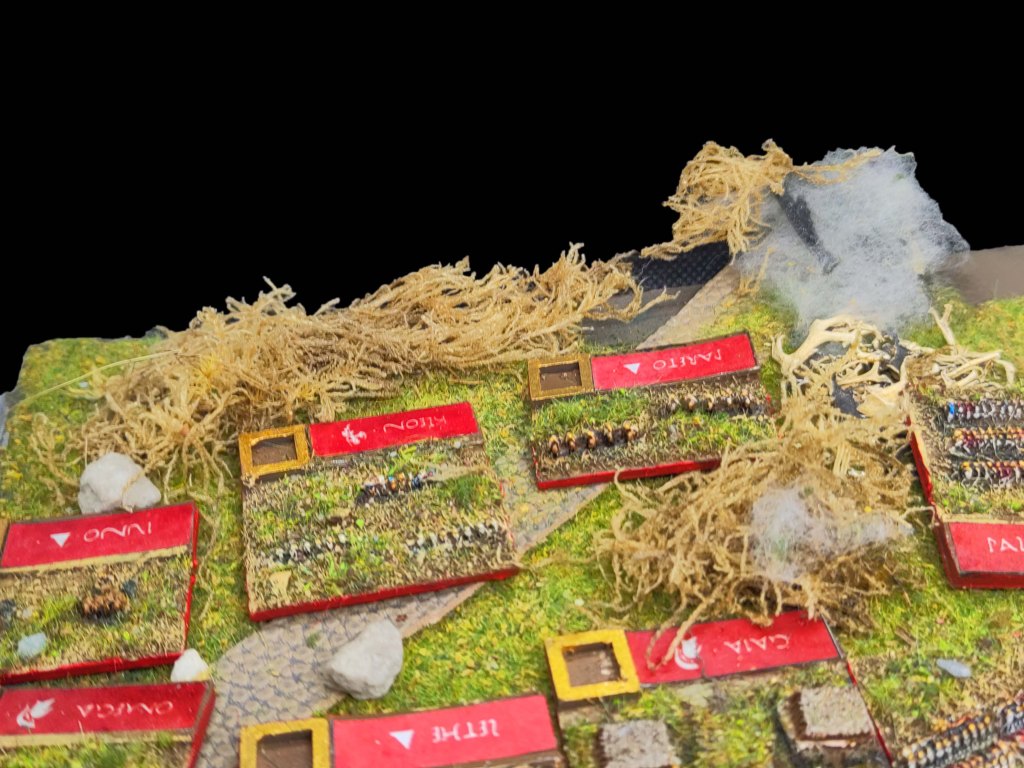
From a distance, the units look like this:
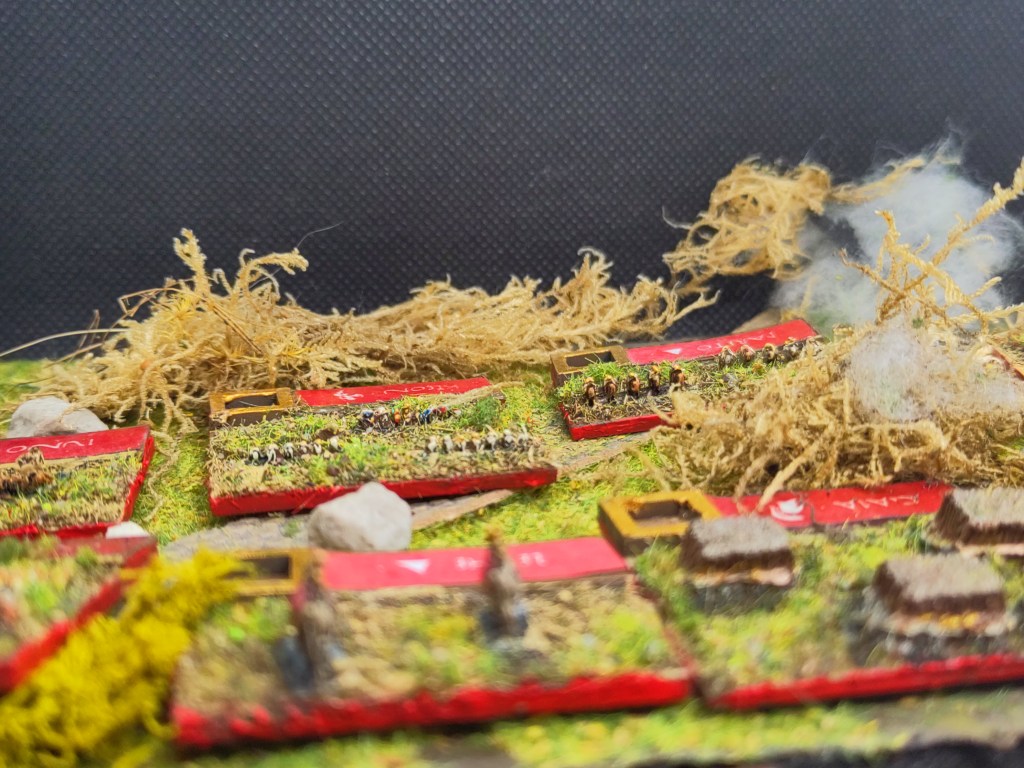
Scenery and Final Touches
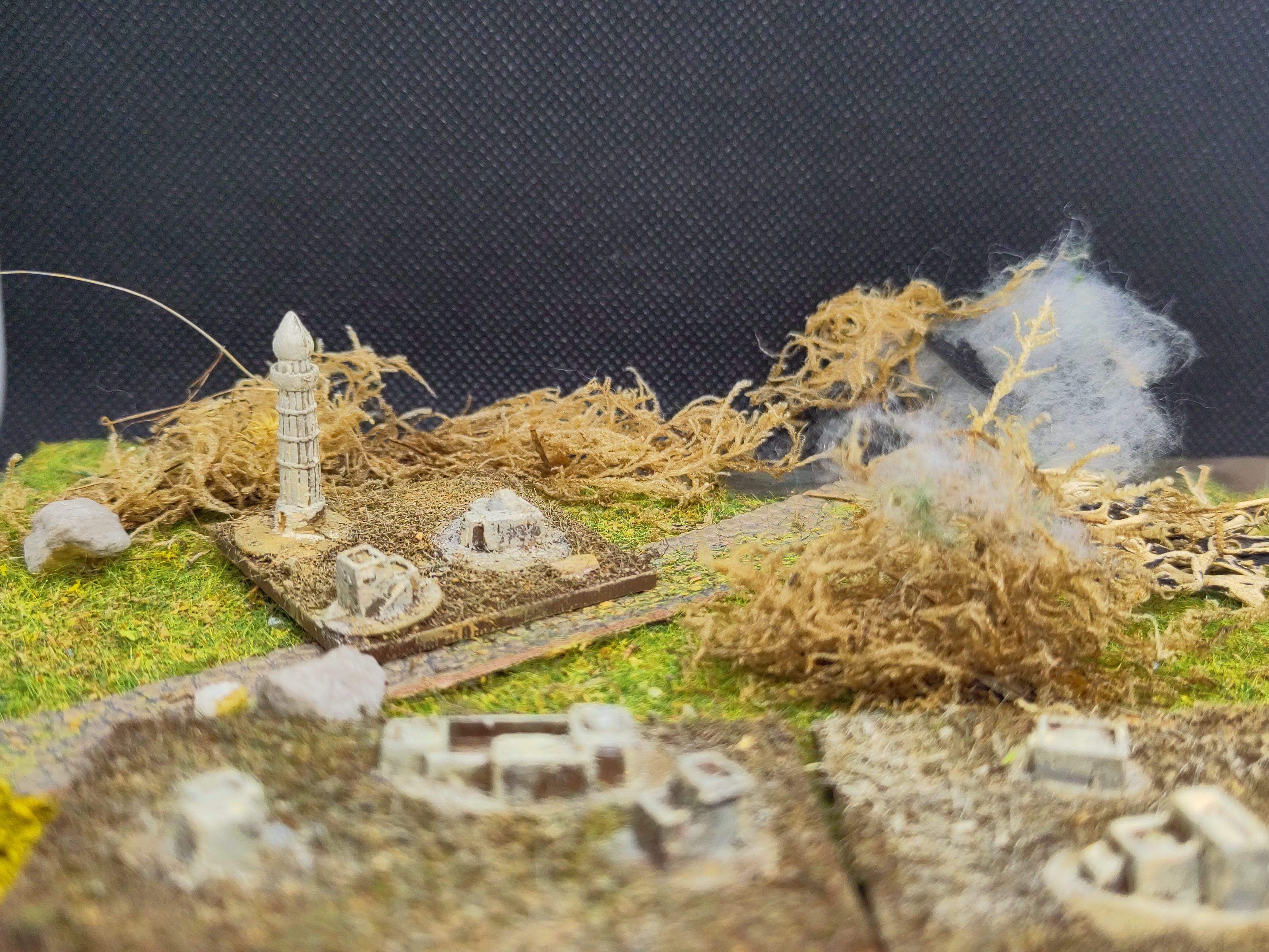
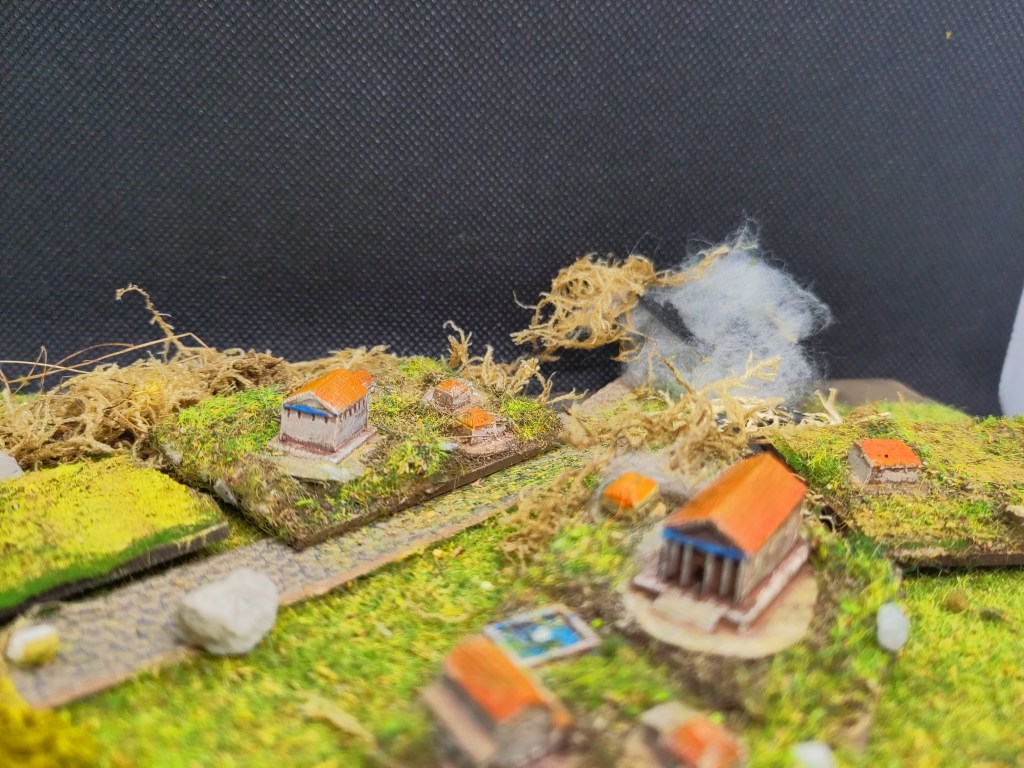
Scenery plays a crucial role in bringing these miniatures to life. My collection now includes sets of Irregular Greek temples and Arab houses, adding depth and context to the battlefield. A few examples:
Below an old Irregular catalog. Irregular is adding new ranges.
Preparation of the bases for the red army took me several evenings – flocking, 40 magnetic strips, labels, priming… When that work was done, painting the blocks/strips was easy: contrast paint and a few stripes, ready!
When the white army is finished I can play Marathon AND Gaugamela AND Cannae. Ancients on a shoestring – that’s 2mm!
 A Bridge To War - Dutch Wargame Blog
One thought on “Tutorial: Speedpainting a Generic 40-Base 2mm Ancient Army”